

Why Sleep Changes During Menopause
And How to Get It Back
If you slept fine your whole life and now lie awake at 3 a.m. staring at the ceiling, you are not imagining it and you are not doing anything wrong. Sleep is one of the first things menopause disrupts, and it is one of the most consequential. Somewhere between a third and two-thirds of women in the menopausal transition report real sleep problems, and for many it is the symptom that makes everything else worse.
Sleep is not downtime. It is when your body does its most important repair and regulation work, including the hormonal housekeeping that keeps the rest of your system steady. When sleep breaks down during menopause, it does not stay in its lane. It reaches into your metabolism, your mood, your weight, and your long-term health. Understanding why gives you somewhere to start.
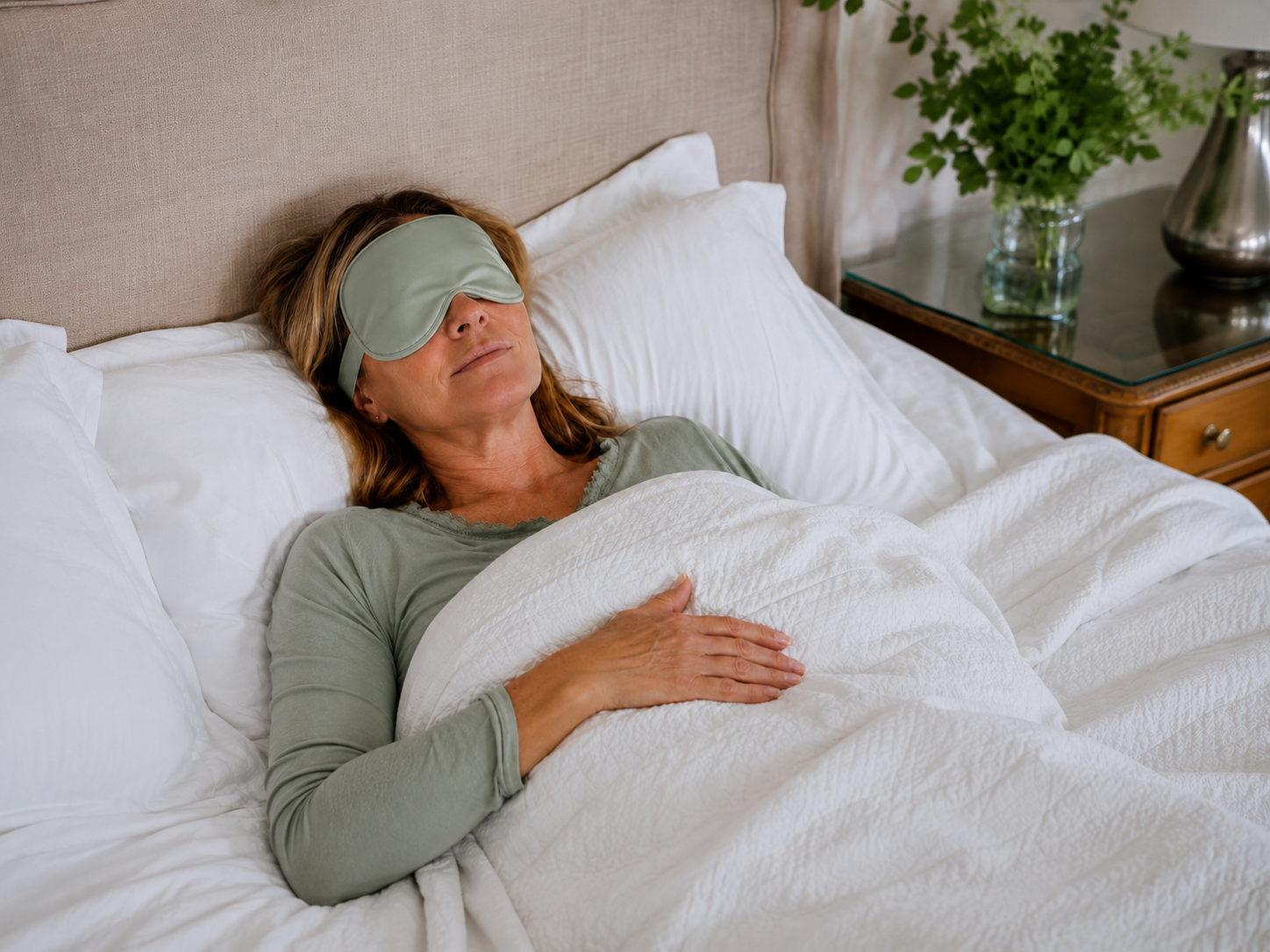
Why menopause steals your sleep
The hormones that decline during this transition are the same ones that help you sleep. Both estrogen and progesterone support good sleep, and as they fall and fluctuate, sleep suffers directly.
Progesterone has a calming effect on the brain. It works on the same system many anti-anxiety and sleep medications target, which is part of why it helps you fall asleep and stay there. As progesterone drops, that natural sedative effect fades. Estrogen plays its own role in sleep quality, body-temperature regulation, and the deeper stages of sleep, so as it declines you get more awakenings and lighter, less restorative rest. At the same time, follicle-stimulating hormone rises, and higher levels of it independently track with trouble staying asleep.
Then there are the symptoms layered on top. Hot flashes and night sweats pull you out of sleep, sometimes without you fully waking, so you feel unrested without knowing why. Menopause also raises the risk of sleep apnea, restless legs, and needing to get up to use the bathroom, all of which fragment the night further. It is rarely one cause. It is usually several stacked on each other.
What sleep does for your endocrine system
Here is why losing sleep matters beyond feeling tired. Sleep and your hormones run on a two-way street, and menopause already has you starting from behind.
Cortisol, your main stress hormone, is meant to fall at night so your body can rest and rise in the morning to wake you. Short or broken sleep pushes cortisol up when it should be low. Elevated cortisol makes you feel wired and anxious at night, and over time it drives your body to hold onto fat, particularly around the middle, exactly where menopause already tends to add it.
Sleep also governs how your body handles blood sugar. Even a few nights of short sleep make your cells more resistant to insulin, and people who regularly sleep less than six hours carry a meaningfully higher risk of developing type 2 diabetes. Since estrogen's decline already nudges you toward insulin resistance, poor sleep compounds a problem menopause started.
Growth hormone, which handles tissue repair and helps maintain muscle and bone, is released in its biggest pulse during the deep sleep of the first few hours of the night. Skip that deep sleep and you lose the repair window, at a stage when protecting muscle and bone already matters more than ever.
Sleep loss also disturbs the hormones that govern hunger and fullness, which is why a bad night so often leads to a day of cravings and reaching for quick carbohydrates. The research on the exact hormone shifts is mixed, but the lived pattern is consistent: less sleep, more hunger, harder choices.
None of these effects sits in isolation. High cortisol worsens insulin resistance, insulin resistance feeds weight gain, weight gain worsens sleep, and the loop tightens. The encouraging part is that it runs the other way too. Consistent, quality sleep helps these systems recover, often within weeks.
Building sleep hygiene that actually works
Sleep hygiene is the set of daily habits that make good sleep more likely. None of it is dramatic on its own. The point is consistency, and a few of these are specifically suited to a menopausal body.
- Keep a steady schedule. Going to bed and waking at close to the same time every day, weekends included, is the single most powerful thing you can do, because it anchors your body clock. An irregular schedule keeps your system guessing.
- Get light right. Bright light in the morning, ideally outdoors, sets your clock for the day. Dim the lights in the evening so your body can produce the melatonin that signals sleep. This natural rhythm weakens with age, so it needs more help now than it used to.
- Make the room cold, dark, and quiet. A cool room helps everyone sleep and helps you specifically, since it lowers the odds a hot flash tips into a full waking. Aim for genuinely cool, use breathable bedding and sleepwear that wick moisture, and keep a fan or a way to vent heat within reach.
- Watch caffeine and alcohol. Caffeine lingers far longer than most people expect, so keep it to the morning. Alcohol is the sneaky one. A glass of wine may help you fall asleep, but it fragments the second half of the night and can trigger hot flashes, so it works against you exactly when you need rest most.
- Build a wind-down. Give yourself thirty to sixty minutes of low-stimulation time before bed, and keep screens out of it where you can, since both the light and the content keep your brain switched on. A warm bath, a book, gentle stretching, or slow breathing all signal to your body that the day is closing.
- Time your movement. Regular exercise deepens sleep, but intense workouts too close to bedtime can leave you too revved to settle. Morning or afternoon exercise tends to serve sleep best.
- Protect the bed as a place for sleep. If you are lying awake for more than about twenty minutes, get up, go somewhere dim and calm, and do something quiet until you feel sleepy, then return. Staying in bed frustrated teaches your brain to associate the bed with being awake. And skip clock-watching in the night, which only raises the anxiety that keeps you up.
When it is more than hygiene
Sometimes good habits are not enough, and that is not a failure. For ongoing insomnia, the most effective treatment is not a pill. It is cognitive behavioral therapy for insomnia, a short, structured program that is considered first-line care and works for menopausal women whether or not hot flashes are part of the picture. It retrains the patterns keeping you awake, and the results tend to last.
It is also worth knowing that the risk of sleep apnea climbs after menopause, and it often goes undiagnosed in women because it does not always look the way people expect. If you snore, wake gasping, or feel exhausted no matter how long you were in bed, that deserves a medical evaluation, not just better habits.
This is where coaching fits and where it knows its limits. I can help you build the routines, the environment, and the daily rhythm that give your body its best shot at rest, as part of a whole-person approach across sleep, nutrition, movement, and stress. What I do not do is replace medical care. If a sleep disorder or a condition needs treatment, we work alongside your doctor, not instead of them.
Rest is not a luxury in this season. It is the foundation the rest of your health is built on. Protect it, and everything else gets a little easier.
coaching packages
Work With Me...
You've been told your labs are normal. You've been told to lose weight, sleep more, stress less, and then sent home. You know something is off, and you're tired of explaining it to people who don't listen.
I've been where you are. I know you're not crazy.
What I teach isn't another overhaul that falls apart by week three. It's small, sustainable changes you can start the day you learn them, built around the four things your body actually runs on: how you nourish it, how you move, how you rest, and how you handle stress. And you won't do it alone. You'll have a private community of women walking the same road right beside you.
Here are three ways to work together. Pick the one that fits where you are right now.
Self Study
For the woman who wants to start today, at her own pace. A step-by-step program you move through on your own schedule, using the same simple changes I made myself. Everything is designed to be doable from day one. No overwhelm, no all-or-nothing rules. Start whenever you're ready.
Group Consulting
Learn alongside a small group of women who get it. You get a live group session (60 minutes) plus access to my private Facebook community, where you can ask questions, share wins, and finally be heard between calls. It's real support and real accountability, without the one-on-one price.
One-on-One Consulting
My most personal option. We work together directly to build a plan around your body, your history, and your life. You get my full attention and a woman in your corner who has actually been through it, not a script. This is for you if you're done piecing it together alone and want a real guide.
References
- “Sleep Disturbance and Perimenopause: A Narrative Review.” Journal of Clinical Medicine, 2025.
- “The role of ovarian hormones in the pathophysiology of perimenopausal sleep disturbances: A systematic review.” Sleep Medicine Reviews, 2022.
- “Sleep disturbance associated with the menopause.” Menopause (The Menopause Society), 2024.
- “Sleep Disturbances in Menopause: Neuroendocrine Mechanisms and Clinical Implications.” Endocrines, 2026.
- “Sleep Disturbance in Perimenopausal Women.” Chronobiology in Medicine, 2024.
- van Egmond LT, et al. “Effects of acute sleep loss on leptin, ghrelin, and adiponectin in adults with healthy weight and obesity: A laboratory study.” Obesity, 2023.
- “The Impact of Sleep Deprivation on Hunger-Related Hormones: A Meta-Analysis and Systematic Review.” MDPI, 2025.
- “Impact of Five Nights of Sleep Restriction on Glucose Metabolism, Leptin and Testosterone in Young Adult Men.” PLoS ONE, 2012.
- “Exercise-Induced growth hormone during acute sleep deprivation.” NCBI / PMC, 2014.
- “Can lack of sleep affect hormones?” SiPhox Health, 2025.
- “Effects of Pharmacologic and Nonpharmacologic Interventions on Insomnia Symptoms and Self-reported Sleep Quality in Women With Hot Flashes: A Pooled Analysis of Individual Participant Data From Four MsFLASH Trials.” Sleep, 2018.
- “Pharmacological and non-pharmacological treatments for chronic insomnia in perimenopausal and postmenopausal women: a systematic review and meta-analysis.” Sleep Medicine, 2026.
- “The Effectiveness of Cognitive Behavioral Therapy on Insomnia Severity Among Menopausal Women: A Scoping Review.” Life, 2024.
- “CBT for Menopause: Improving Sleep and Hot Flashes Without Medication.” MGH Center for Women’s Mental Health, 2026.