
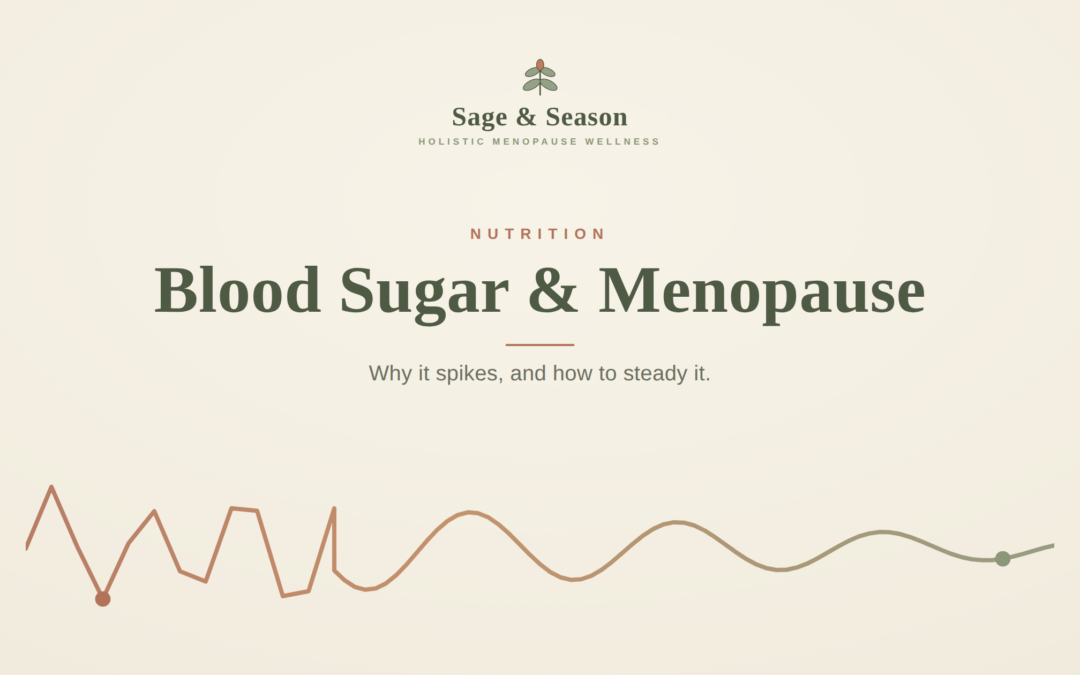
If your energy crashes every afternoon, your cravings have gotten louder, or the weight around your middle will not shift, your blood sugar may be part of the story. Estrogen helps your body keep blood sugar steady. As it declines through perimenopause and menopause, that steadying effect fades and the swings get bigger. This is not a willpower problem. It is a hormonal one, and it responds well to how you eat.
Why estrogen matters for blood sugar
Every time you eat, carbohydrates raise the glucose in your blood. Insulin is the hormone that moves that glucose out of the bloodstream and into your cells to be used for energy. Estrogen makes your cells more responsive to insulin, so the whole system runs smoothly. It also supports glucose uptake into muscle and helps keep inflammation low.
When estrogen fluctuates in perimenopause and then settles low after menopause, your cells respond less efficiently to insulin. Glucose lingers in the blood longer, and your body has to produce more insulin to do the same job. The Menopause Society notes that menopausal women are at greater risk of insulin resistance for exactly this reason. Diabetes UK adds that the erratic hormone swings of perimenopause can cause rapid moves from high to low blood sugar for no obvious reason.
Two other changes of this stage make it harder. Muscle is one of the main places your body parks glucose, and muscle naturally declines with age and falling estrogen, which lowers insulin sensitivity further. At the same time, fat tends to shift toward the abdomen, and that visceral fat interferes with how your body uses insulin. None of this means something has gone wrong. It means the rules changed and your body will feel its best if your nutrition after menopause changes with them.
What unstable blood sugar feels like
Blood sugar swings are easy to miss because they wear the same clothes as other menopause symptoms. Common signs include:
- An energy crash in the afternoon, often with a strong pull toward sugar or caffeine
- Cravings for refined carbohydrates that feel hard to reason with
- Brain fog, irritability, or shakiness a couple of hours after a carb-heavy meal
- Weight settling around the middle that does not respond to eating less
- Possibly more frequent hot flashes, since elevated glucose may make your internal thermostat more reactive
How to steady your blood sugar
You do not need a restrictive diet. You need meals built to hold the line. These changes work with your biology instead of against it, and most women feel a difference within days.
Build every meal around protein
Anchor each meal with a real serving of protein, roughly 25 to 30 grams. Think eggs, fish, poultry, Greek yogurt, tofu, or legumes. Protein blunts the glucose rise and keeps you full for hours. Breakfast matters most, because a protein-light, carb-heavy morning sets up crashes and cravings for the rest of the day.
Never eat carbohydrates naked
A carbohydrate on its own spikes fastest. Pair it with protein, fat, or fiber to slow the rise. An apple with a spoon of nut butter instead of the apple alone. Crackers with cheese rather than crackers by themselves. The pairing flattens the spike without giving up the food.
Put fiber on the plate
Vegetables, legumes, whole grains, and seeds slow digestion, feed your gut, and steady the glucose curve. A simple target is to fill half your plate with non-starchy vegetables at your main meals.
Ease off refined carbs and added sugar
These cause the biggest spikes now, so they cost more than they used to. This is moderation, not elimination. Swap refined for whole where it is easy, keep the treats you love for when you will truly enjoy them, and notice how much steadier you feel.
Do not skip meals
Long gaps and skipped breakfasts feel efficient and then backfire, driving an energy crash and rebound cravings later. Regular, balanced meals keep the line steadier than any single “perfect” food.
Move after you eat
A 10 to 15 minute walk after a meal helps your muscles pull glucose straight out of your blood, softening the spike. Over the longer term, strength training rebuilds the muscle that improves insulin sensitivity, which is one more reason resistance work belongs in your week. Sleep and stress matter too. A short night or a high-stress day both raise blood sugar the next day, so protecting your rest is part of the picture.
When to talk to your doctor
This is about steadying your everyday energy, not treating a medical condition. Menopause is a smart time to get screened, because the same hormone shifts that nudge your energy around also raise your risk of insulin resistance over time. If you have persistent high readings, a family history of type 2 diabetes, or symptoms like unusual thirst, frequent urination, or deep fatigue, ask your provider about a fasting glucose or A1c test. If you already manage diabetes, talk with your provider before making changes to how you eat.
The way your body handles blood sugar is one of the least discussed parts of menopause, and one of the most responsive to change. Protein first, carbs with company, fiber on the plate, and a short walk after. Small changes, done most days, add up faster than you would expect.
Sources include The Menopause Society, Diabetes UK, and Ohio State Health. This article is for general education and is not medical or nutritional advice. Talk with your healthcare provider before making changes, especially if you have a health condition or take medication.